



A Castle That Still Shapes Montalcino
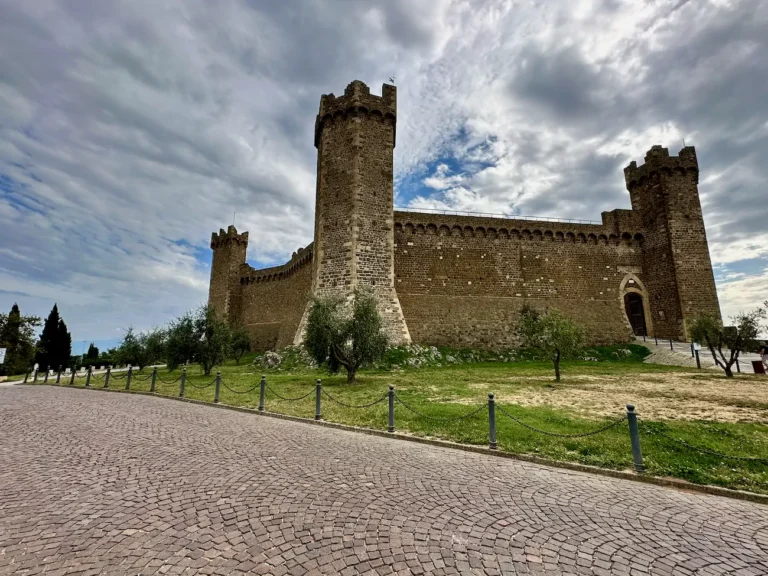
High above the Val d’Orcia, the Fortezza di Montalcino does more than complete the skyline. It gives the town its physical and historical frame, and explains why this hilltop place mattered for centuries.
This became one of the most memorable experiences from our time in Italy. Our home base for this part of the trip was Rome. We rented a car and traveled to places we hadn’t visited previously, such as Lucca, Siena, Bologna, and Montalcino. By the way, I have a funny story about driving in Italy. I’ll tell you more at the end, and what we learned about renting a car there. Look for my #LFMTravelTip below.
Tuscany has a way of slowing time, and climbing the stone steps of Fortezza di Montalcino feels like stepping directly into that history.
We stopped here after our private wine tasting at Sassetti Livio Pertimali in Montalcino to reflect and marvel at the beauty of this castle, but more importantly, why it was built this way.
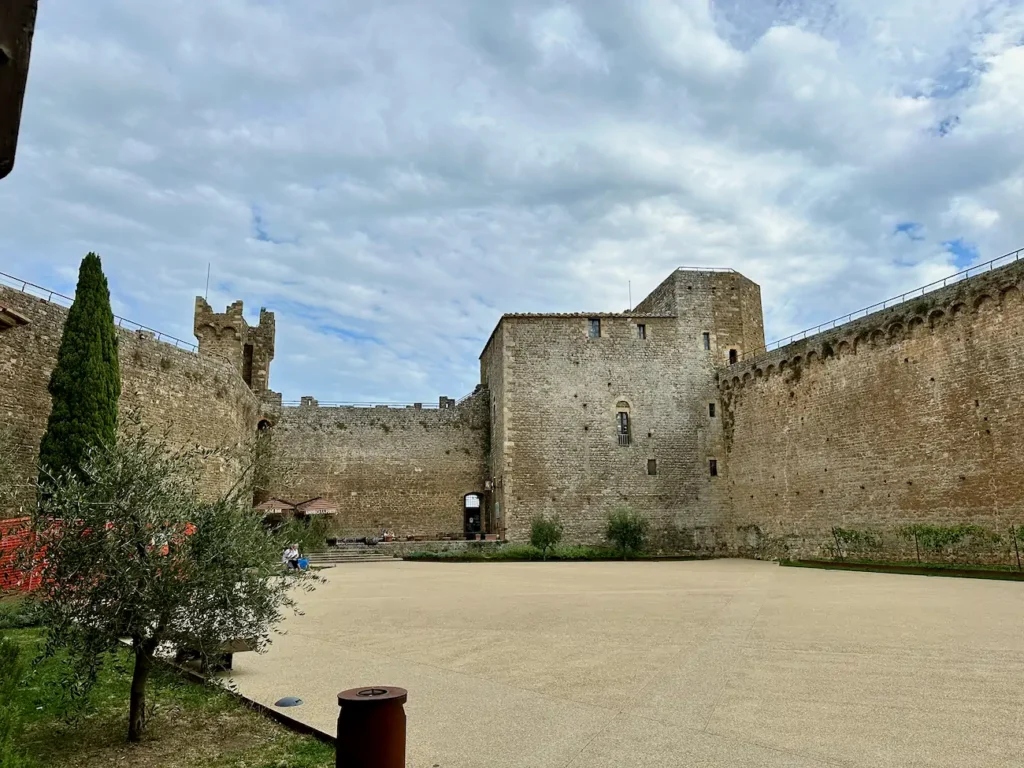
We arrived in Montalcino after winding through Tuscany’s rolling hills, stopping first for a private Brunello tasting before making our way toward the fortress walls rising above town.
Many visitors pause to take in the view, take a photo, and move on. That misses the point. The fortress is tied to war, wine, and the long contest over inland Tuscany, and those links still shape Montalcino’s identity. To understand the town, it helps to start with the walls.
The fortress sits at the center of Montalcino’s story
The fortress is not an accessory at the edge of town. Streets bend toward it, views open from it, and its outline still governs the way Montalcino is first seen from the surrounding hills. In medieval Tuscany, height meant security, warning, and control. Montalcino had all three.
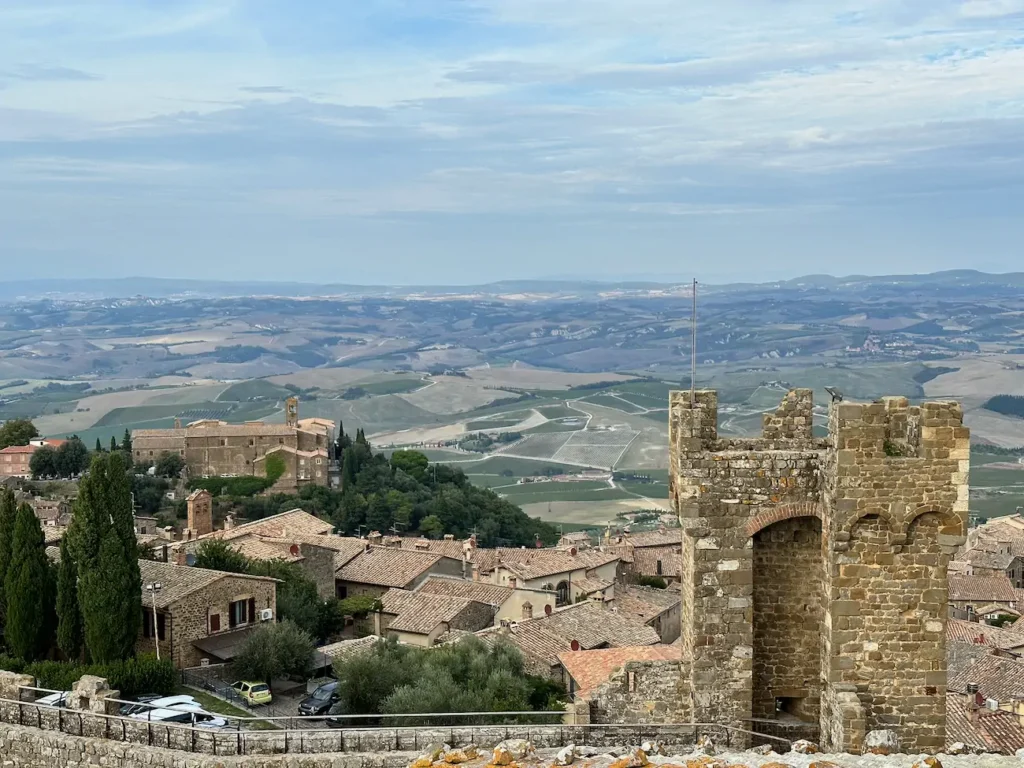
Built in 1361 at the highest point of Montalcino, the fortress later became part of Siena’s resistance against Florentine and Medici forces during the 16th century.
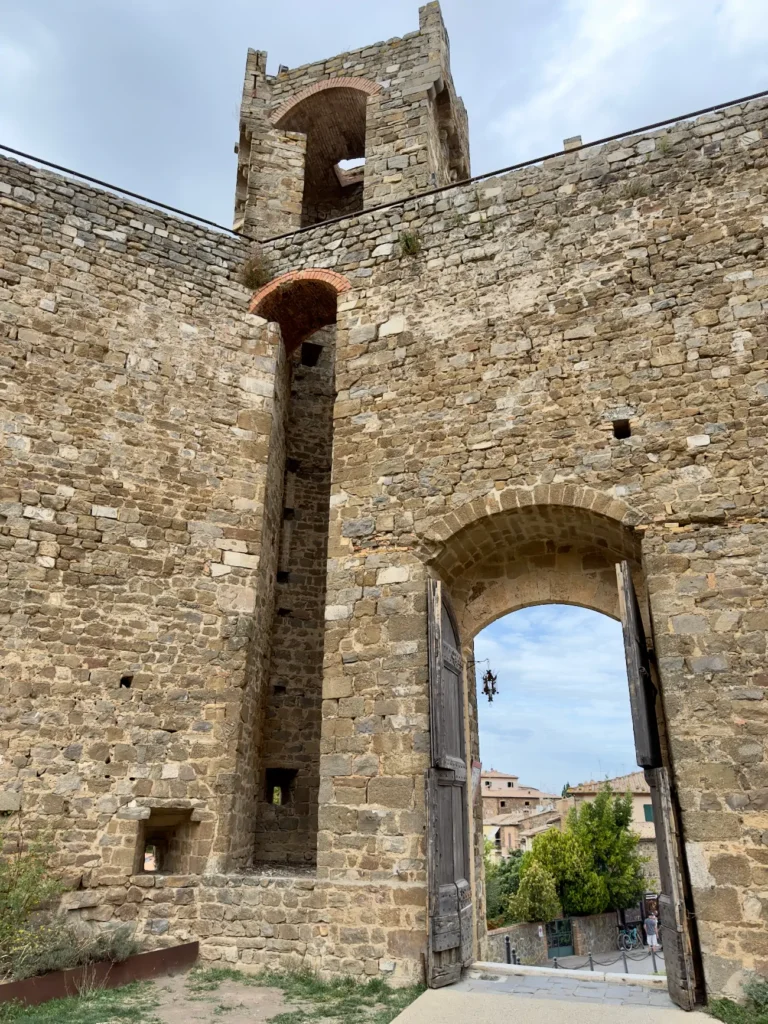
What visitors see inside the Fortezza di Montalcino today
Today, the site isn’t a museum packed with staged rooms. It looks and feels like you’re stepping into what the castle once was. Its force comes from stone, space, and the sense that the structure never stopped belonging to the town.
Inside, John was thrilled to explore the wine collection featuring the region’s world-class Brunello, while I grabbed a seat in the courtyard to take notes and soak up the energy as church bells echoed through town. Sitting there listening to the bells, I could see why people fall in love with Montalcino.
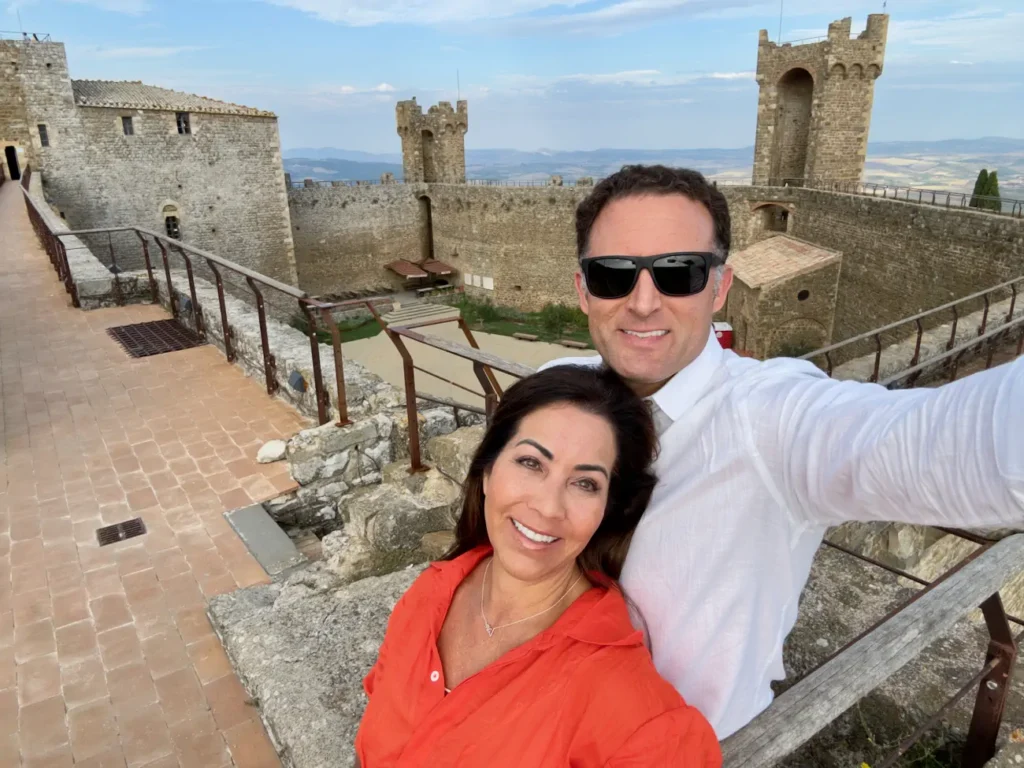
The architecture that has survived the centuries
As we explored more, we learned that the thick, blunt lines of the walls and the outward-pushing corners were designed to widen the field of defense. Gates and passages feel compressed because entry points were once vulnerable weak spots. But inside, there are open courtyards, walkable sections, and narrow staircases with small openings to the outside world. I couldn’t help but wonder what life was like here centuries ago.
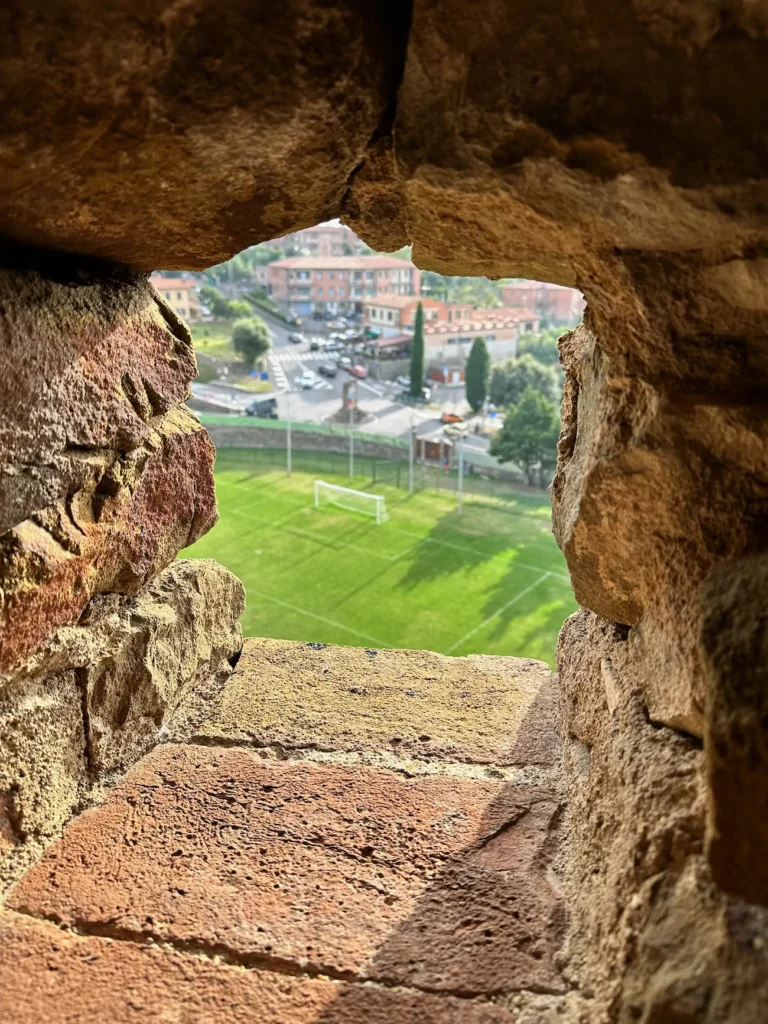
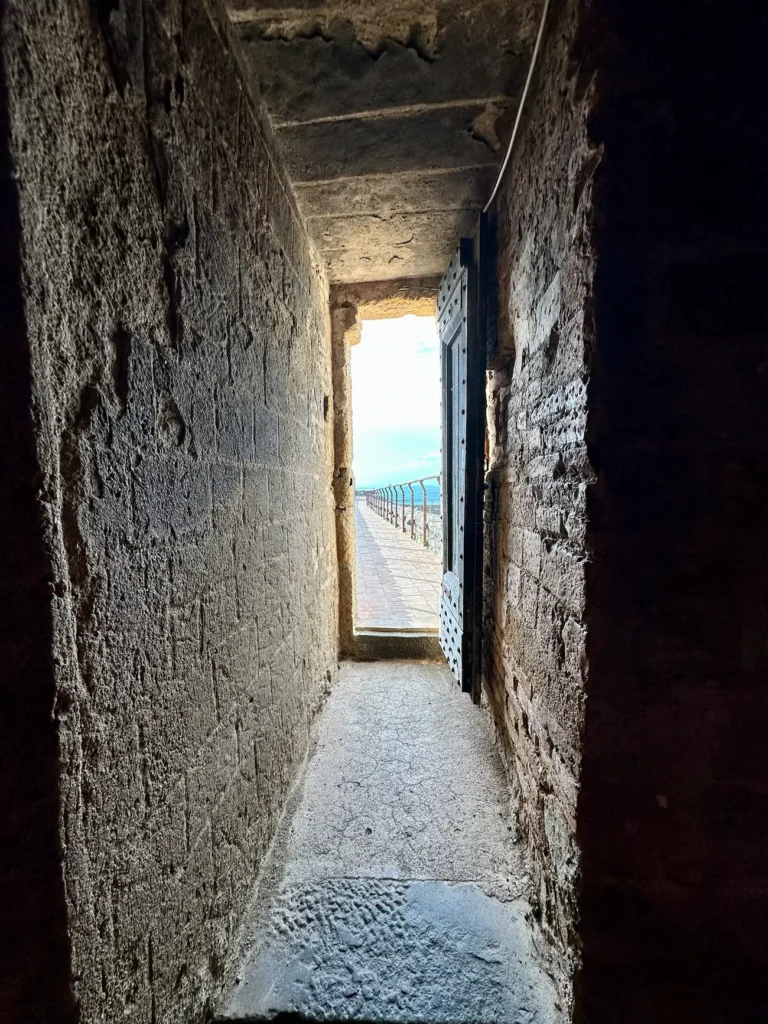
What makes the fortress so fascinating is that today, we see it as beautiful, though that was never the intention. The height, angles, and enclosed spaces were originally built for protection long before they became aesthetic features. The fortress feels rustic, real, and surprisingly untouched, making it easy to imagine the lives once lived within these walls.
The views from the ramparts are part of the experience
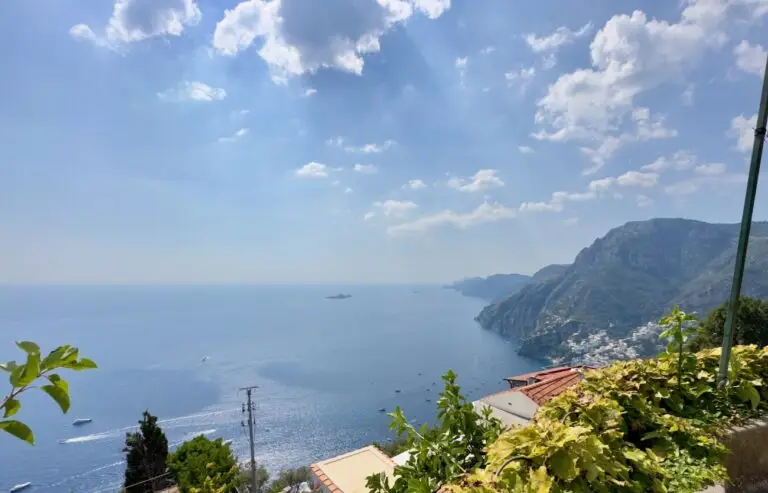
The ramparts once served as a critical defensive advantage for the fortress, but today they offer some of the most breathtaking views in Tuscany. From above, the landscape unfolds into vineyards, olive groves, winding farm roads, rows of cypress trees, and the rooftops of Montalcino gathered along the ridge.
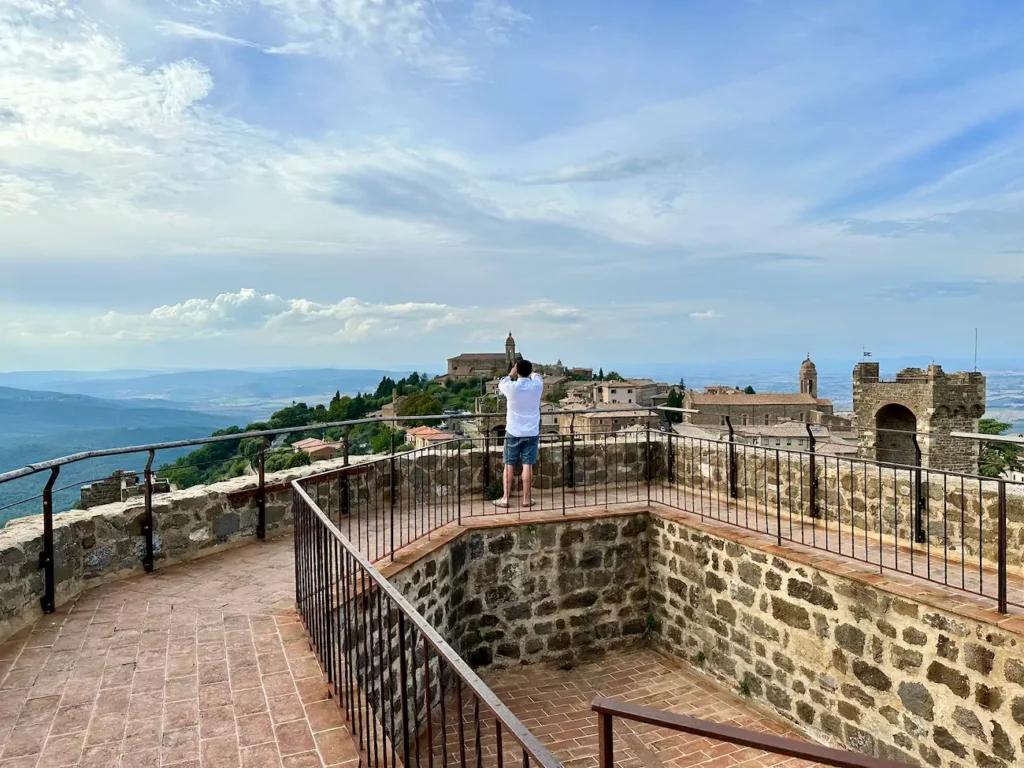
The light here changes everything, especially near sunset when the surrounding hills soften into gold. Yet this same panorama, now peaceful and cinematic, once served as a warning system, allowing defenders to track movement across the countryside.
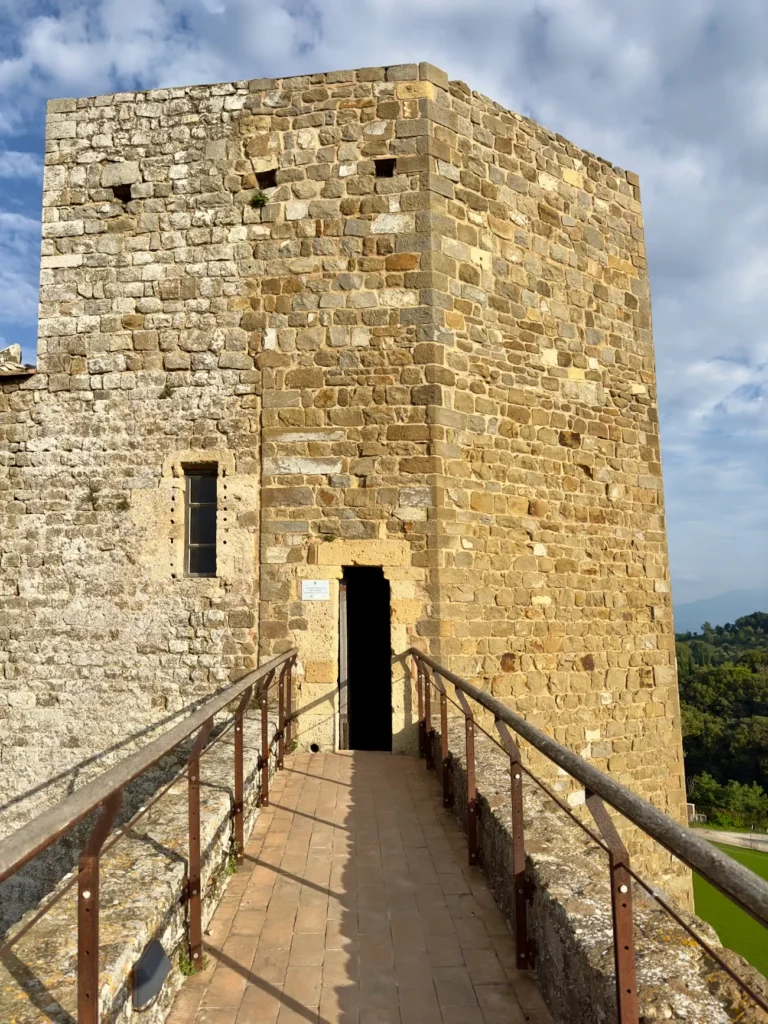
Long after leaving Montalcino, this remained one of the places that stayed with us most.
How to visit the Fortezza di Montalcino without missing the details
A short visit can work, but timing changes the mood. Morning light picks out the rough stone and usually brings thinner crowds. Late afternoon gives the hills more depth, especially in clear weather. In either case, the site rewards time more than speed.
But again, sunsets here are stunning. That would absolutely be my pick if I were to do it again.
LFM Travel Tip
If you visit Montalcino, plan enough time to experience both the fortress and the surrounding wine country. Sunset is especially beautiful here, and pairing a visit to Fortezza di Montalcino with a Brunello tasting makes for an unforgettable day in Tuscany.
Driving in Italy
Now, about renting a car in Italy. We found it surprisingly easy to pick up the car and travel throughout the country. The surprise came about eight months later when traffic tickets suddenly started arriving in the mail. We weren’t speeding — or at least we didn’t think we were — and we believed we had parked legally, but the tickets still flooded in, making our rental car adventure a bit more expensive than expected. They were legitimate, so we paid them, but the experience taught us an important lesson: driving in a foreign country comes with challenges beyond simply navigating the roads. Still, we’d absolutely do it again.
Wine, Brunello, and the Culture of Montalcino
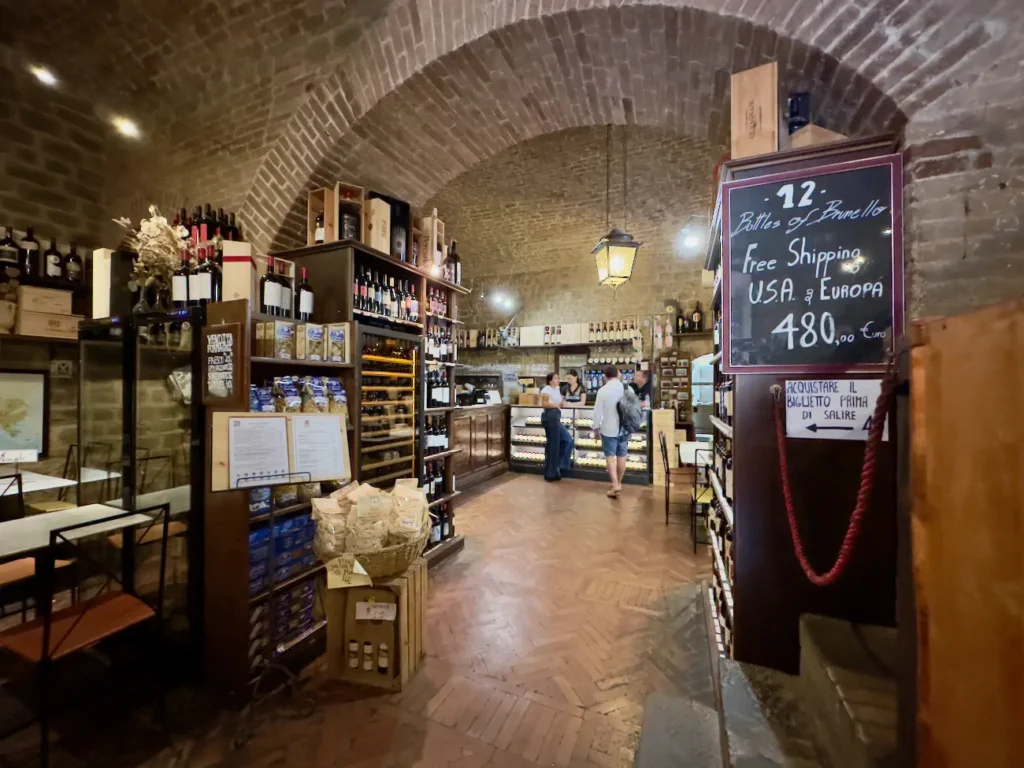
Why is Montalcino considered such an important destination for wine lovers?
Montalcino is regarded as one of Italy’s most important wine regions because of Brunello di Montalcino’s reputation for quality, longevity, and expression of terroir. Beyond the wine itself, the region offers a unique combination of medieval history, breathtaking Tuscan scenery, and small family-run producers that create a deeply authentic travel experience.
What makes Enoteca La Fortezza so memorable?
While many wine shops in larger cities like Rome and Florence felt elegant and polished, Enoteca La Fortezza felt deeply connected to the history and culture of Montalcino itself. Located inside a medieval fortress overlooking the Tuscan countryside, the experience felt immersive rather than commercial. The shop offered an opportunity to explore Brunello through the stories of the producers, the vintages, and the region’s traditions, making it feel far more personal and authentic.
What makes Brunello di Montalcino so special?
Brunello di Montalcino is one of Tuscany’s most iconic wines, made entirely from Sangiovese grapes grown around the hilltop town of Montalcino. Even for non-wine experts, what makes the experience memorable is how connected the wine feels to the landscape itself — rolling vineyards, cypress-lined roads, historic villages, and generations of winemaking tradition. Brunello is known for being elegant, complex, and capable of aging beautifully for decades.
Which wines or producers stood out the most during our visit?
Two producers that left a lasting impression were Poggio di Sotto and Cupano. Poggio di Sotto stood out for its purity, elegance, and classic expression of Brunello, while Cupano felt more intimate and quietly extraordinary. Both wines captured the emotion, craftsmanship, and sense of place that make Montalcino so special for wine lovers.