









The other day, I put something on the floor because I planned to donate it. Then I left it there.
Not for hours. Not exactly for days. But long enough for a longtime friend to be shocked.
“In your 30s,” he said, “you would have picked that up instantly.”
He was right.
Midlife Wellness for Women is Getting a Rewrite in 2026
For much of my life, anything out of place bothered me. A dish in the sink. A pile on a chair. An unanswered email. I believed everything needed to be handled immediately, perfectly, efficiently. I thought staying on top of everything was part of being successful, responsible, healthy, and driven.
But somewhere along the way, something shifted for many women and me. Across the U.S., the wellness conversation is moving away from punishment, perfection, and endless tracking, and toward recovery, strength, sleep, and sustainability.
Now, in my 50s, I realize that not everything has to be perfect all the time for life to still be good.
I can let something sit for a moment. I can leave space. I can breathe. I can trust that not everything requires urgency.
Oddly enough, I think that realization may be part of what modern midlife wellness is really about.
Not giving up.
Not “letting yourself go.”
Not abandoning goals.
But redefining what health, energy, and living well actually look like now.
Because the old version of wellness, the one built around hustle, perfection, endless optimization, punishing workouts, and constant productivity, starts to feel different in midlife. The body changes. Recovery changes. Energy changes. Priorities change.
Many of us are tired.
Not tired of life.
Tired of the pressure to perform wellness perfectly.
I still care deeply about fitness. Keep Fit with Phoebe has always been about finding that balance between physical strength and mental well-being. I still push myself during workouts. I still believe in taking care of my body, building muscle, staying active, and aging as strongly and gracefully as possible.
But the new rules of midlife wellness feel less aggressive now.
They feel more grounded.
Less about creating hustle and havoc.
More about creating vibrant energy.
Less about proving something.
More about protecting what matters.
For years, wellness culture encouraged us to wake up earlier, optimize harder, track every metric, say yes to everything, and somehow still look effortlessly pulled together while doing it. But many women in midlife are beginning to realize that more effort does not always create better health.
Sometimes it creates exhaustion.
Lately, I’ve even started taking off my Apple Watch at night. The data is still there. It will always be there. I can return to it anytime I want. But I’ve realized I don’t need to monitor myself every second to understand what my body needs.
There’s a growing term for this: optimization fatigue.
The exhaustion that comes from trying to constantly improve, measure, track, and perfect yourself.
Midlife wellness, at least from where I stand now, feels more intuitive than that.
It’s about sleeping enough.
Protecting your energy.
Building strength without burning yourself out.
Learning which foods actually make you feel good.
Creating boundaries that allow you to recover mentally and physically.
And maybe most importantly, it’s about becoming kinder to yourself.
Because midlife often arrives during one of the busiest and most emotionally demanding seasons of life. Many women are caring for children, teenagers, or adult kids while also helping aging parents. It’s what’s often called the sandwich generation — pulled in multiple directions emotionally, financially, physically, and mentally all at once.
If you’re in that phase, you already know how beautiful and exhausting it can be.
And wellness in this season starts to shift from chasing perfection to learning how to sustain yourself while still showing up for the people you love.

Sleep has Become My Most Important Midlife Health Habit
Tackling sleep in midlife has sometimes felt like chasing a moving target. Sleep has always been an issue for me. In my 20s and 30s, I worked on-air as a television news anchor and reporter, often waking up at 3:30 or 4 a.m. My internal clock never really recovered from those years of early alarms, breaking news, and unpredictable schedules.
After I became a mother, like many women, I never fully returned to that deep, carefree sleep I once had. Even when life calmed down, my nervous system didn’t always get the memo.
I’ve never liked taking medications. Ambien was never for me. Even melatonin made me feel off. So for years, finding real rest became an ongoing experiment: part wellness journey, part science project.
That’s also when I became obsessed with the data. Sleep scores. Recovery scores. Readiness scores. I tracked everything. At one point, I trusted the numbers more than I trusted my own body. If the app told me I slept poorly, I believed I was tired before I even got out of bed.
But midlife has started to shift that for me.
I still believe in tracking and measuring things. In my marketing career, ROI matters. Metrics matter. Data tells a story, but it can be wrong, too. In this season of life, I’m learning to trust something deeper — how I actually feel.
Now, before I even look at my sleep data in the morning, I pause and check in with myself first.
Do I feel rested? Calm? Clear-headed? Energized?
I’m trying to let my body speak before the algorithms do.
I’ve also learned that sometimes the smallest tools can make the biggest difference. One thing that completely changed the game for me in midlife was discovering the Ozlo sleepbuds. They sit flat in your ears, unlike traditional earbuds, and have become part of my nightly ritual.
At bedtime, I’ll often listen to an audiobook or calming storytelling for about 30 minutes. Usually it’s something familiar, not stimulating, sometimes even a book I’ve listened to before. Once the audio ends, the earbuds gently transition to ambient sounds such as ocean waves, rainfall, or bubbling rivers.
It sounds simple, but it has helped me sleep more deeply than I have in years. My husband can now get up earlier than I do without waking me, which used to be almost impossible. The funny thing is, it was never the big noises that disrupted my sleep. It was always the tiny sounds, such as footsteps, drawers opening, and movement in another room, that kept my nervous system on alert.
Better sleep in midlife is not just about getting more hours. It is about creating conditions that signal to the body that it is safe to rest.
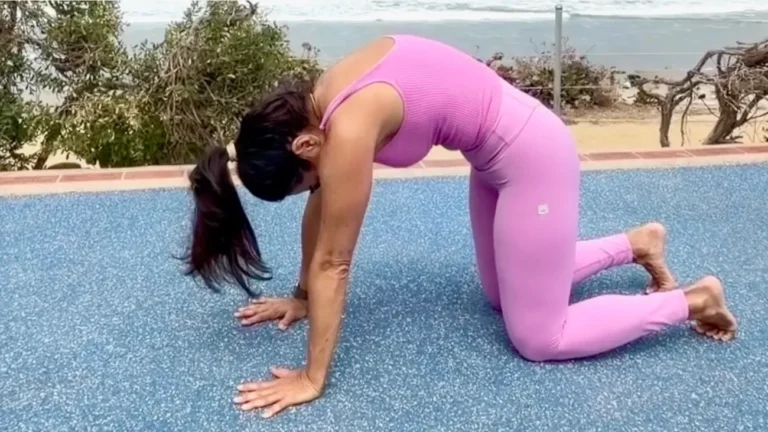
I’ve also found that releasing physical tension helps. These are the neck and shoulder stretches I do when stress builds up, and my body needs help winding down.
Recovery is Not a Luxury Anymore
Another thing I started experimenting with was magnesium glycinate. I like the brand Pure Encapsulations. What surprised me most was learning how common low magnesium intake may be. The National Health and Nutrition Examination Survey (NHANES) found that 48% of Americans consumed less than the estimated average requirement from food and beverages.
That matters because magnesium plays a role in hundreds of processes in the body, including nervous system function, muscle function, and energy production.
And if you’re strength training in midlife, something I’ve intentionally returned to after years away from heavy lifting, recovery becomes even more important. A 2024 systematic review in PubMed Central (PMC) showed that taking magnesium supplements reduced the onset of muscle soreness, improved recovery and performance, and provided a protective effect on muscle damage.
The review found, “To reach these positive effects, individuals engaged in intense exercise should have a Mg requirement 10–20% higher than sedentary people, to be taken in capsules, and 2 h before training. Moreover, it is suggested to maintain magnesium levels in the recommended range during the off-season.”
But be sure to always consult your doctor before taking any supplements.
What I’m learning is that midlife wellness isn’t really about finding one magic solution. It’s about building your own personal toolkit.
A few small habits.
A few supportive rituals.
Many of these habits have become part of my Go-To Wellness Weekend routine, a weekly reset that helps me recharge physically and mentally.
Less punishment.
More listening.
Less obsession with perfection.
More curiosity about what actually helps you feel and live well.
That’s why I cherish my Go-To Wellness Weekend routines. I do these things weekly to help rejuvenate my body and mind and give them the me-time they deserve.
Boundaries are Now Part of Wellness, Not a Side Issue
This is a big one for me. I’ve been bad at setting boundaries most of my life. Partly because of a people-pleasing personality, FOMO, and a “what-would-they-think-if-I-said-no” mantra.
All of it added up to boundary issues.
We know midlife comes with stacked roles: worker, parent, partner, adult child, scheduler, helper — the list goes on. Time gets tight, but energy gets tighter. That is why, for me, setting boundaries has moved from self-help language to the core of my healthy living lifestyle.
Overcommitment does not stay on the calendar. It turns into late nights, skipped meals, shortened workouts, and a mind that never fully powers down. Recovery suffers first, then mood, then focus.
And if you’re an introvert/extrovert, like me, you may end up regularly feeling depleted. I love social time in both my work and personal life, but I definitely need quiet, alone time.
Saying no to one more task can protect my sleep and keep stress from spilling into everything else. In that sense, boundaries are not avoidance.
They are maintenance.
They help me live well.
Strength Training is Replacing Cardio-Only Thinking
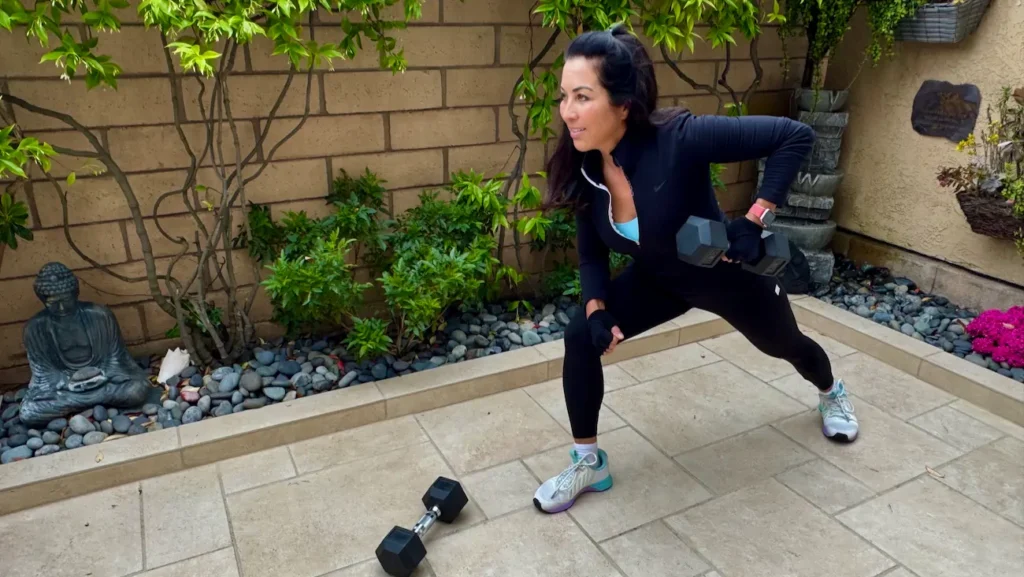
Strength training in midlife is not about chasing a younger body. It’s about preserving muscle, protecting mobility, supporting bone health, and keeping the body capable for everyday life while achieving the look that’s important to you.
The best movements are rarely fancy. Squats, hinges, Romanian deadlifts (a personal favorite of mine), pushes, pulls, and carries train the same patterns we use every day.
Standing up from a chair is a squat.
Picking up a bag from the floor is a hinge.
Carrying groceries tests grip, posture, and core strength.
Now, just add weights and go for it.
Movement matters. Mobility is key to aging with strength and grace.
It’s a philosophy that guides many of the workouts and wellness practices I share through Keep Fit With Phoebe.
How to train smart without burning out
Steady progression beats bursts of intensity. Two or three full-body strength sessions each week can make a real difference, especially when paired with walks, balance work, yoga, and gentle cardio.
The point is to challenge your body without requiring a long recovery period after every workout.
In midlife, the best workout is not always the hardest one. It is the one you can recover from, repeat, and build on.
Small Habits Matter More Than Heroic Effort
The new model looks ordinary on purpose. It may mean a 20-minute walk instead of my two-hour-plus hikes, two strength sessions, a set bedtime, and a bit of planning at the start of the week.
For me, those habits survive my travel schedule, work deadlines, and family demands.
That is the point.
The best wellness habits are often the ones that remain standing when life gets messy.
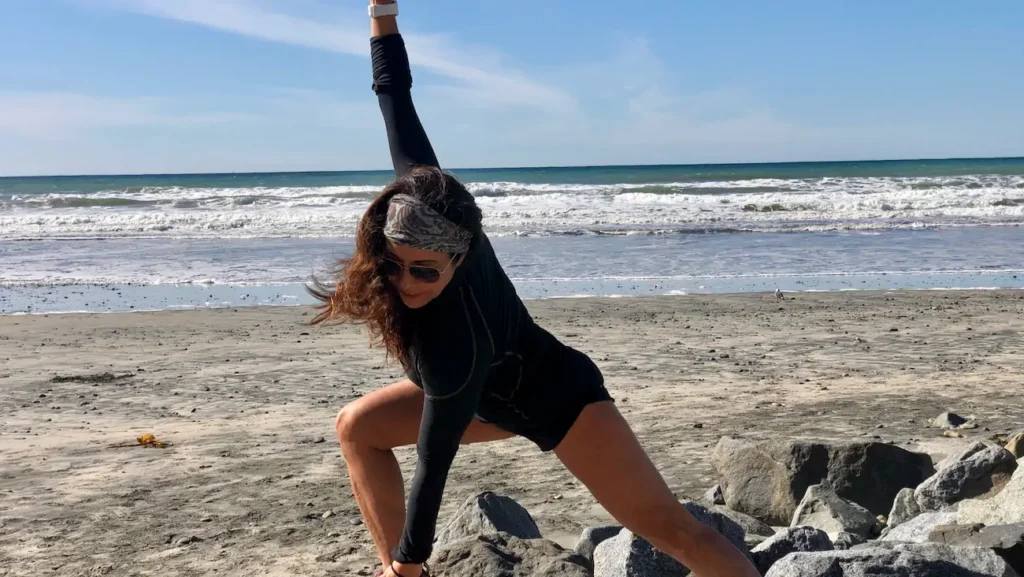
Sometimes that habit is as simple as taking a walk, stretching for ten minutes, or spending time outdoors in places like Laguna Beach, where slowing down feels a little easier.
Consistency matters more than heroic effort. In midlife, the most effective plan is often the one that still fits on a crowded day.
The way to Keep Fit is to Live Fit daily.
Realistic Midlife Wellness is the New Goal
Don’t you just love seeing influencers share unrealistic expectations for wellness? In the comments, you see people saying things like, “But I have a job.” And “Who has time for a two-hour massage first thing in the morning on a weekday?”
That’s why the strongest midlife routines now share a simpler structure.
They protect sleep.
They build strength.
They guard time and attention.
And yes, we can do that. It may take effort and reprioritizing, but when it’s done well, we feel different.
I feel better.
Live better.
Am better.
That mix does more than improve health markers. It preserves daily function, lowers the cost of stress, and makes ordinary life feel more livable.
The healthiest version of midlife may depend less on optimization and more on steadiness, recovery, and knowing what is worth keeping.
Living well isn’t only about fitness. It’s also about curiosity, adventure, good food, meaningful experiences, and exploring places that inspire us. That’s part of the philosophy behind Live Fit Magazine and why travel remains such an important part of my own wellness journey.
Time for me to step away from the computer and reconnect with my body for a bit. That may be the real lesson of midlife wellness after all.